
Branding vs Logo Design: What’s the Difference?
Branding and logo design are closely related, but they are not the same thing.
A logo is one part of a brand.
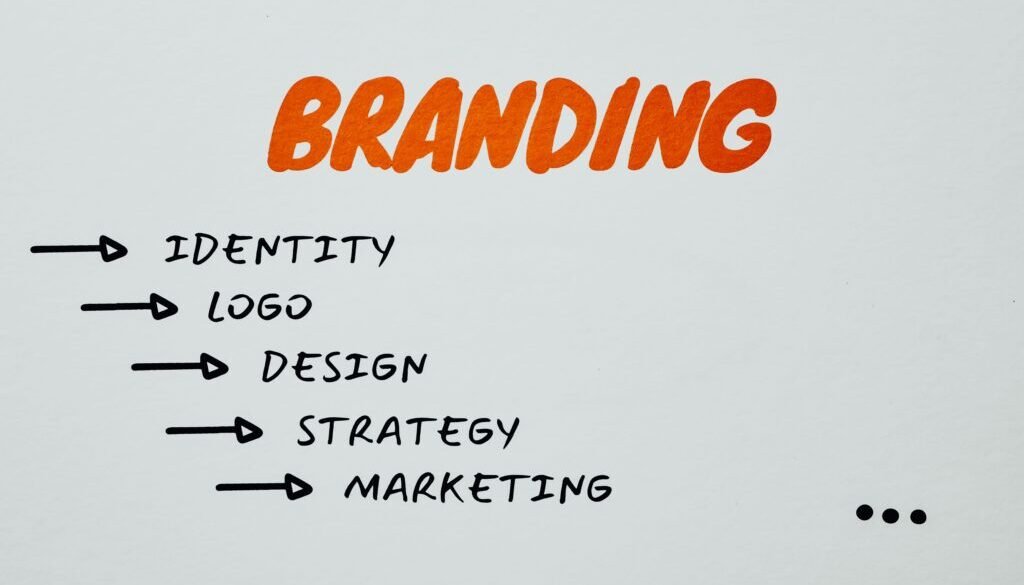
Branding is the broader system that shapes how a business looks, communicates and presents itself across different customer touchpoints.
This can include:
- Logo
- Colours
- Typography
- Messaging
- Tone of voice
- Photography
- Graphic style
- Website presentation
- Social media
- Packaging
- Signage
- Advertising
- Customer communications
Understanding the difference between branding and logo design can help businesses choose the right service and avoid paying for work they do not actually need.
If you are comparing providers, you can also explore our Branding & Logo Design Services page.
What Is Logo Design?
Logo design focuses on creating the main visual identifier for a business.
A logo may include:
- Business name
- Initials
- Symbol
- Icon
- Monogram
- Tagline
- Typography
- Colours
The purpose is to create a recognisable mark that can represent the business across different applications.
A logo may appear on:
- Website
- Social media
- Business cards
- Signage
- Vehicles
- Workwear
- Packaging
- Quotes and invoices
- Advertising
A professional logo should usually be practical as well as visually appropriate.
What Is Branding?
Branding is broader than logo design.
It can include the visual, verbal and strategic elements used to represent a business.
Depending on the project, branding may involve:
- Business positioning
- Target audience
- Brand personality
- Logo
- Colour palette
- Typography
- Messaging
- Tone of voice
- Tagline
- Photography style
- Graphic elements
- Brand guidelines
- Templates
- Website application
- Social media application
Branding helps create consistency across the different places where customers encounter the business.
What Is Brand Identity?
Brand identity usually refers to the visual and verbal elements used to represent the brand.
This may include:
- Logo
- Colours
- Fonts
- Graphic elements
- Photography
- Iconography
- Messaging
- Tone of voice
The brand identity gives the business a consistent way to present itself.
It can then be applied across:
- Website
- Social media
- Signage
- Advertising
- Packaging
- Documents
- Vehicles
- Workwear
A logo sits inside this broader identity system.
Logo Design vs Brand Identity
Logo design is narrower.
Brand identity usually includes the logo plus supporting elements.
For example, a logo design project may deliver:
- Primary logo
- Secondary logo
- Colour variations
- Vector files
- PNG files
A brand identity project may also include:
- Colour palette
- Typography
- Graphic style
- Brand guidelines
- Social assets
- Templates
- Messaging
The exact scope varies between providers.
This is why businesses should compare deliverables rather than relying only on service names.
A Logo Is Not the Entire Brand
A common misunderstanding is that once a logo is created, the branding is complete.
The logo may be the most visible element, but customers also experience:
- Website design
- Colours
- Language
- Photography
- Service
- Packaging
- Advertising
- Social media
- Customer communication
If these elements feel unrelated, the business may still appear inconsistent even with a strong logo.
Branding aims to connect these elements more clearly.
What Does Logo Design Usually Include?
Depending on the provider, logo design may include:
- Design brief
- Research
- Initial concepts
- Revision rounds
- Primary logo
- Alternative layout
- Black version
- White version
- Colour version
- Vector files
- PNG files
- JPG files
- Colour specifications
- Font information
Some designers may also include:
- Basic logo guidelines
- Social icon
- Business card
- Email signature
However, these additional assets are not universal.
Our guide to What Should You Receive From a Professional Logo Design Service? explains common deliverables in more detail.
What Can Branding Include?
A broader branding project may include several stages.
These may cover:
- Brand discovery
- Positioning
- Audience research
- Competitor review
- Brand personality
- Messaging
- Logo
- Colour system
- Typography
- Graphic system
- Photography style
- Brand guidelines
- Templates
- Application examples
Larger branding projects may also include:
- Naming
- Tagline development
- Brand architecture
- Packaging
- Website direction
- Signage
- Vehicle graphics
- Social media systems
Not every business needs all of these.
The scope should match the actual business requirements.
Brand Strategy
Brand strategy can form part of a broader branding project.
It may explore:
- What the business stands for
- Who it serves
- How it is positioned
- What makes it different
- What customers should associate with it
- How it should communicate
This strategic work can help guide visual design decisions.
For example, a premium specialist brand may require a different identity from a value-focused mass-market business.
Brand Positioning
Positioning considers how the business wants to be understood within the market.
A company might position itself around:
- Expertise
- Premium quality
- Affordability
- Convenience
- Innovation
- Local service
- Speed
- Simplicity
- Specialisation
The visual and verbal identity should support that positioning.
A logo alone cannot define the entire position of a business.
Brand Personality
Brand personality describes the traits the business wants to communicate.
These might include:
- Professional
- Friendly
- Bold
- Modern
- Traditional
- Premium
- Energetic
- Technical
- Approachable
- Minimal
These qualities can influence:
- Colours
- Fonts
- Photography
- Copy
- Design style
A clear personality can make the brand feel more consistent.
Colour Palette
Logo design may include the colours used inside the logo.
Branding usually goes further by creating a broader palette.
This may include:
- Primary colour
- Secondary colours
- Accent colours
- Neutral colours
- Background colours
These colours can then be applied consistently across:
- Website
- Social media
- Signage
- Advertising
- Documents
The palette helps create visual continuity beyond the logo itself.
Typography
A logo may use a particular typeface, but a complete brand identity often defines fonts for broader business use.
These may include:
- Heading font
- Body font
- Supporting font
- Font weights
Typography can be used across:
- Website
- Documents
- Social media
- Presentations
- Advertising
This helps different materials feel like they belong to the same business.
Messaging
Branding may also define how the business describes itself.
Messaging can include:
- Value proposition
- Business description
- Tagline
- Headlines
- Service messaging
- Calls to action
- Key customer benefits
Without consistent messaging, a business may sound different across every channel.
A broader branding project can help create a clearer communication framework.
Tone of Voice
Tone of voice describes how a business communicates.
It may be:
- Formal
- Conversational
- Professional
- Friendly
- Technical
- Direct
- Energetic
- Reassuring
Tone can influence:
- Website copy
- Social media
- Advertising
- Customer communications
A logo does not define tone of voice.
This is one example of an area that belongs more broadly to branding.
Photography Style
Photography can also become part of a brand identity.
A business may define whether images should feel:
- Bright
- Natural
- Professional
- Premium
- Candid
- Minimal
- Technical
- Lifestyle-focused
Consistent photography can make websites and social content feel more connected.
This is especially important for brands that rely heavily on imagery.
Graphic Elements
Branding may also include supporting graphics.
These can include:
- Shapes
- Patterns
- Lines
- Icons
- Illustrations
- Background treatments
- Graphic motifs
These elements can help create recognisable marketing materials even when the logo is not the main focus.
Brand Guidelines
Brand guidelines document how the identity should be used.
They may include:
- Logo versions
- Clear space
- Minimum size
- Approved colours
- Typography
- Background use
- Photography style
- Graphic elements
- Incorrect logo usage
More detailed guidelines may also cover:
- Tone of voice
- Messaging
- Social media
- Advertising
- Packaging
- Signage
A simple logo project may only include basic usage instructions.
A full branding project may include much more extensive documentation.
Logo Design Is Often the Starting Point
For many small businesses, logo design is the first step.
This may be enough when the business simply needs:
- A professional logo
- Colour versions
- Logo files
- Basic usage guidance
The business can then develop additional brand elements over time.
There is no rule that every small business must purchase a complete branding package from the beginning.
When Is Logo Design Enough?
Logo design may be enough if:
- The business is new and has a limited budget
- Existing colours and fonts already work
- The business has simple branding requirements
- Marketing materials are limited
- A full brand strategy is unnecessary
- The main issue is an outdated or missing logo
A well-designed logo with suitable file formats may cover the immediate need.
Additional branding can be added later.
When Might You Need Full Branding?
A broader branding project may make sense when:
- Launching a new business
- Repositioning an existing company
- Targeting a new customer segment
- Expanding into new markets
- Existing branding is inconsistent
- Several designers or staff use the brand
- Multiple locations need consistency
- Packaging is important
- A new website is being developed
- Marketing activity is expanding
The more customer touchpoints a business has, the more useful a structured identity system can become.
Branding for a New Business
A new business may need to create several elements at once.
These may include:
- Business name
- Positioning
- Logo
- Colours
- Typography
- Website
- Social media
- Documents
- Signage
A broader branding project can help ensure these elements are developed as one system.
However, a small startup may prefer to begin with only the essentials.
The appropriate scope depends on budget and launch requirements.
Branding for an Established Business
Established businesses may already have:
- Logo
- Website
- Social media
- Signage
- Marketing materials
The problem may be inconsistency rather than a complete absence of branding.
In that case, work might focus on:
- Refining the logo
- Standardising colours
- Defining fonts
- Updating messaging
- Creating guidelines
- Refreshing templates
A complete rebrand may not always be necessary.
What Is a Rebrand?
A rebrand involves changing significant aspects of an existing brand identity.
This may include:
- Logo
- Colours
- Typography
- Messaging
- Positioning
- Business name
The scale can vary.
Some rebrands are complete.
Others are more evolutionary, updating the identity while maintaining recognisable elements.
A rebrand should generally have a clear business reason.
Logo Refresh vs Rebrand
A logo refresh may involve smaller changes such as:
- Updated typography
- Simplified symbol
- Refined colours
- Improved spacing
- Modernised layout
A broader rebrand may involve changes to:
- Positioning
- Audience
- Messaging
- Visual identity
- Brand strategy
Businesses should identify the real problem before deciding how much work is required.
Branding and Website Design
Branding and web design are related but separate services.
Branding can provide:
- Logo
- Colours
- Typography
- Messaging
- Visual direction
Web design applies those elements to a functional website.
A business with clearly defined branding can give a web designer a stronger foundation.
However, some providers offer branding and website design together.
Branding and Social Media
Branding can help create consistency across social media.
This may include:
- Profile images
- Cover graphics
- Templates
- Colours
- Fonts
- Graphic style
- Tone of voice
Social media management itself is a different service.
A branding provider may create the system, while a social media provider uses it to create ongoing content.
Branding and Advertising
A brand identity can also support advertising.
Advertisements may use:
- Brand colours
- Fonts
- Photography
- Graphic elements
- Messaging
Consistent branding can make campaigns easier to recognise across different platforms.
However, advertising strategy and campaign management remain separate disciplines.
Branding and Packaging
Product businesses may require packaging design as part of or after a branding project.
Packaging may use:
- Logo
- Colours
- Typography
- Photography
- Illustrations
- Product information
The identity provides the visual foundation.
Packaging design then adapts that identity to physical products.
Branding and Signage
Signage may include:
- Shopfronts
- Offices
- Vehicles
- Events
- Construction sites
A brand identity helps establish:
- Logo
- Colour
- Typography
- Graphic style
A signage designer can then adapt these elements for practical production.
Branding and Workwear
Businesses with uniforms or workwear may need branding suitable for:
- Embroidery
- Screen printing
- Heat transfer
A complicated logo may require a simplified version.
This is why practical applications should be discussed during the branding process.
What Should a Brand Identity Package Include?
A brand identity package may include:
- Primary logo
- Secondary logo
- Icon
- Colour palette
- Typography
- Graphic elements
- Brand guidelines
- Social assets
- Templates
The exact scope varies between providers.
Our next guide, What Should a Brand Identity Package Include?, covers these deliverables in more detail.
Logo Design Costs vs Branding Costs
Logo design usually has a narrower scope than full branding.
A logo project may focus on:
- Research
- Concepts
- Revisions
- Final files
A branding project may add:
- Strategy
- Messaging
- Colour system
- Typography
- Graphics
- Guidelines
- Templates
- Applications
Because more work may be involved, broader branding services can cost more than logo design alone.
However, pricing varies significantly between providers.
Do You Need To Pay for Branding and Logo Design Separately?
Not always.
Some providers offer branding packages that already include logo design.
Others separate services into:
- Logo design
- Brand identity
- Brand strategy
Before purchasing, check whether the logo is already included in the broader package.
Avoid paying twice for overlapping work.
How To Compare Logo Design Services
When comparing logo designers, review:
- Portfolio
- Design process
- Number of concepts
- Revisions
- Logo variations
- File formats
- Source files
- Ownership
- Pricing
The cheapest service may not include the files or variations required for practical use.
How To Compare Branding Services
When comparing branding providers, look beyond the logo.
Ask whether the project includes:
- Strategy
- Positioning
- Audience research
- Messaging
- Logo
- Colours
- Typography
- Brand guidelines
- Graphic elements
- Templates
- Applications
The more clearly these deliverables are defined, the easier providers are to compare.
Questions To Ask a Logo Designer
Useful questions include:
- How many concepts are included?
- How many revision rounds are included?
- Which final file formats will I receive?
- Are vector files included?
- Are logo variations included?
- Are colour specifications provided?
- Are source files included?
- Who owns the final logo?
- Are basic guidelines included?
- Are additional brand assets available?
These questions help clarify the actual scope.
Questions To Ask a Branding Provider
For a broader branding project, consider asking:
- Does the project include brand strategy?
- Is positioning included?
- Will you define the target audience?
- Is messaging included?
- Is logo design included?
- Is a colour palette included?
- Is typography included?
- Are graphic elements included?
- Are brand guidelines included?
- Are social assets included?
- Are templates included?
- How many revisions are included?
- Who owns the final assets?
- Are editable files included?
- What additional costs may apply?
This allows businesses to compare branding proposals more accurately.
Branding vs Logo Design: Which Do You Need?
Choose based on the actual problem you are trying to solve.
You may only need logo design if:
- The business lacks a professional logo
- Existing brand elements are already suitable
- You have limited immediate requirements
- The budget is restricted
A broader branding project may be appropriate if:
- The whole identity needs to be developed
- Current branding is inconsistent
- The business is being repositioned
- Many marketing assets need to work together
- Several people or suppliers will use the brand
Neither option is automatically better.
The right scope depends on the business.
Compare Branding and Logo Design Providers Before Choosing
Branding and logo design are closely connected, but they are not interchangeable.
Logo design creates the primary visual identifier.
Branding can create the broader system surrounding that identifier.
Before selecting a provider, define what your business actually needs and compare:
- Process
- Deliverables
- Strategy
- Logo files
- Colours
- Typography
- Messaging
- Guidelines
- Templates
- Revisions
- Ownership
- Pricing
Compare Digital Services helps Australian businesses explore professional branding and logo design providers and request quotes based on their project requirements.
COMPARE BRANDING & LOGO DESIGN SERVICES & GET FREE QUOTES
Frequently Asked Questions About Branding and Logo Design
What Is the Difference Between Branding and Logo Design?
Logo design focuses on creating the main visual identifier for a business, while branding can include a broader system of colours, typography, messaging, imagery, guidelines and strategy.
Is a Logo the Same as a Brand?
No. A logo is one component of a broader brand identity.
Do Small Businesses Need Full Branding?
Not always. Some small businesses may only need a professional logo and a simple visual system, while others may benefit from a more complete brand identity.
Does Branding Include Logo Design?
Often, yes, but not every service is structured the same way. Check the exact deliverables before purchasing.
Does Logo Design Include Brand Guidelines?
Basic logo guidelines may be included in some packages, while comprehensive brand guidelines are more commonly part of a broader branding service.
Is Branding More Expensive Than Logo Design?
It can be because broader branding projects may involve strategy, messaging, colours, typography, guidelines and templates in addition to logo design.
Can I Start With a Logo and Add Branding Later?
Yes. Many businesses begin with a logo and develop the broader brand identity as their requirements grow.
What Is a Brand Identity Package?
A brand identity package is usually a collection of visual brand assets such as logo variations, colours, typography, graphic elements and guidelines.
When Should a Business Consider Rebranding?
A rebrand may be worth considering when the existing identity no longer reflects the business, audience or positioning, or when branding has become inconsistent.
How Do I Compare Branding and Logo Design Services?
Compare the process, deliverables, revisions, files, ownership, strategy, guidelines and total pricing rather than relying only on service names.